The Myth of the Perfectly Clear Goal
A meaningful creative goal can start unfinished. Learn how to revise its wording while keeping the underlying intention steady and useful.
The common mistake with a creative goal is trying to make its wording perfectly clear before beginning; the cost is that an interesting project can be dismissed simply because its destination is still hazy. A meaningful goal does not need a polished description on day one. It needs enough shape to guide a next choice, plus room for experience to change what the goal means.
Clarity can come later
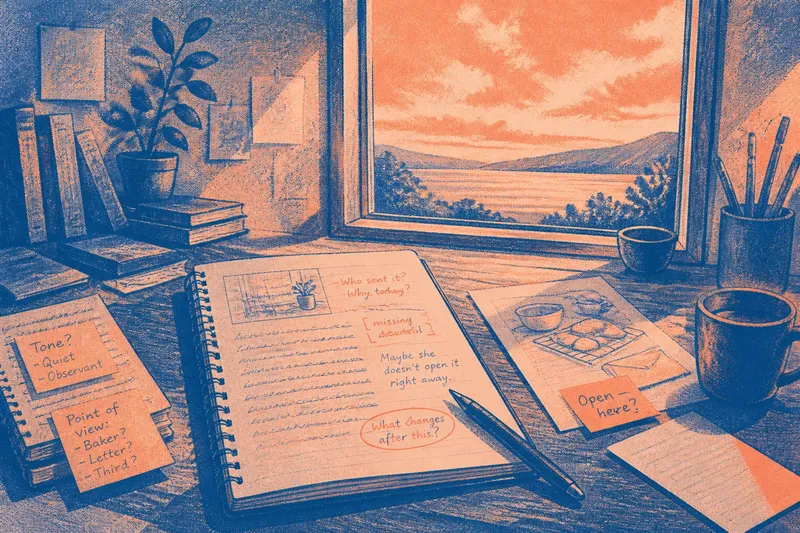
At the start, you may know the kind of work you want to make without knowing its final form. “I want to make something about the old shops on my street” could lead to drawings, short interviews, a photo essay, or a map annotated with remembered details. The subject is present; the format is still open.
That openness is not automatically indecision. Sometimes the first version of a goal is a working description: a phrase you can carry into a session while noticing what attracts your attention. It gives the project a direction without pretending you already know every turn.
Try separating the part you care about from the part you have not settled. In a notebook, write one sentence for each: “I want to pay attention to how this place changes” and “I do not yet know whether the work will be written or visual.” The distinction makes uncertainty specific instead of letting it blur the whole aim.
Keep the intention visible
An intention is the reason or quality you want to keep close as you work. A goal is the current description of what you intend to make or pursue. The two can be related without being identical: the project description may change while the underlying interest remains recognizable.
Think of a goal as a paper label on a storage box. You can replace the label when you learn what is inside; changing it does not mean you threw the contents away. The useful question is not, “Have I kept the original wording?” but, “Does this new wording still serve the concern that made me begin?”
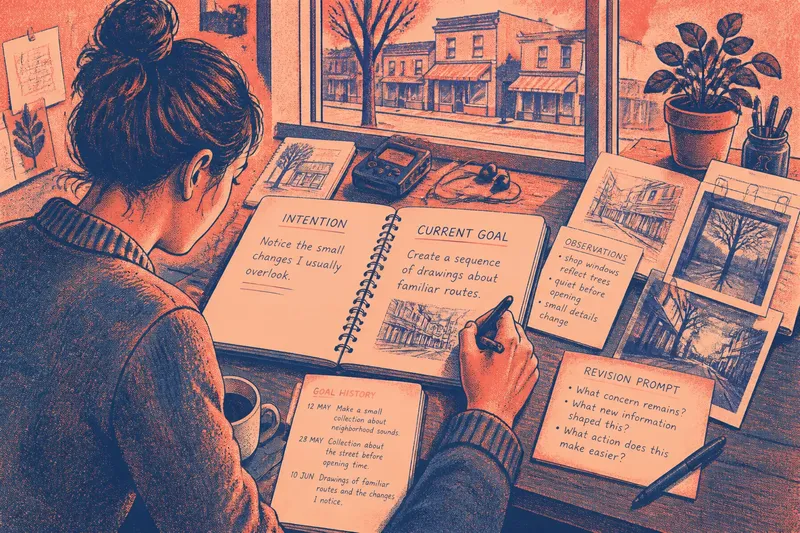
Keep a short note of that concern beside the current goal. For example: “Current goal: create a sequence of drawings about familiar routes. Intention: notice the small changes I usually overlook.” If the project later becomes a written sequence, compare the new form with the intention rather than treating the format as sacred.
Revise with evidence
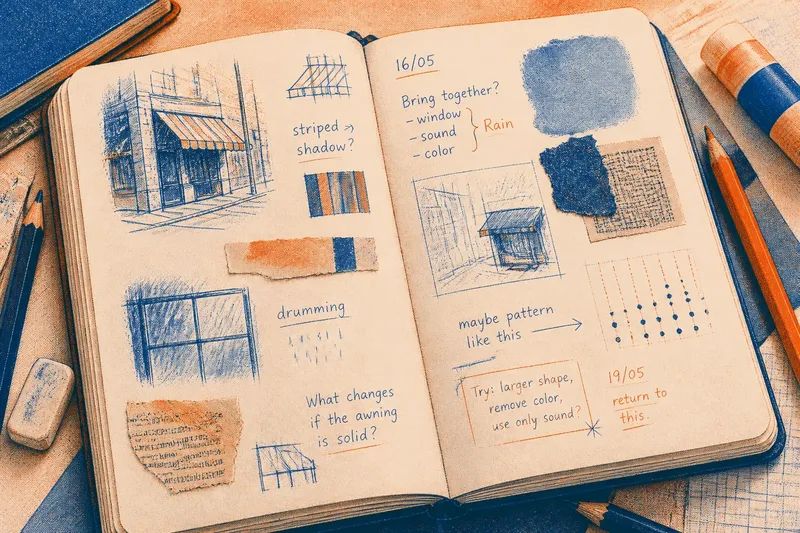
Vague wording can become more useful after you have made something. A few sketches may reveal that you are less interested in the whole street than in the way shop windows reflect passing trees. That observation offers new material for the goal; it is not proof that the earlier aim was foolish.
Say you begin with the goal “make a small collection about neighborhood sounds.” After recording notes on buses, doors, and birds, you notice that the quiet moments before shops open hold your attention most. You revise the goal to “make a collection about the street before opening time” and keep listening for other sounds that fit. The expected observable result is a clearer selection of material, not a promise that the project must take one fixed form.
When revising, name what prompted the change. Was it a repeated detail in your notes, a practical constraint, a new question, or a preference you had not noticed? A brief reason helps distinguish learning from merely reaching for a more flattering description.
- Write down the current goal in one plain sentence.
- Underline the words that describe the subject or activity you still care about.
- Circle the parts that are assumptions, such as a format, audience, or ending.
- Make or gather one small piece of material before rewriting the whole aim.
- Note what that material changes, if anything, and what it leaves intact.
- Replace the goal wording only when the new sentence helps you choose what to do next.
Goal changes or drift?
A revised goal can stay faithful to an intention, but not every change does. A useful revision responds to something you have learned about the subject, your interest, or the work’s conditions. Drift tends to replace the question before you have spent enough time with it to understand what it asks of you.
One check is to compare the old and new versions using three questions: What concern remains? What new information shaped the revision? What action does the revised goal make easier to choose? If you cannot name any remaining concern or new information, pause before treating a fresh idea as a necessary change.
This is not a test with a correct score. A project can genuinely lose its importance, and a person can decide to leave it. But it helps to describe that decision honestly: “I no longer want to pursue this” is different from “I have discovered a more precise way to pursue it.” The distinction gives you a clearer account of what happened.
Questions about evolving goals?
How specific should a creative goal be?
Make it specific enough to suggest a next action, such as gathering images of a subject or drafting a scene. Leave unresolved details open when deciding them now would require knowledge you do not yet have.
How often should I rewrite my goal?
There is no useful schedule for revision. Revisit the wording when new work or circumstances give you a concrete reason, rather than changing it each time the project feels difficult.
What if I cannot name my intention?
Start with what you keep noticing, collecting, or returning to, then describe that pattern in ordinary language. The intention may become clearer through those observations, rather than arriving as a complete statement before you begin.
Let wording remain provisional
A goal can be a sentence under revision, not a contract. Date each version in your notebook and keep the earlier wording nearby; seeing the sequence can show whether the project is gaining definition, changing direction, or simply circling the same uncertainty.
The myth of the perfectly clear goal asks you to settle the language before the work can teach you anything. A better aim is more modest: choose wording that helps you act now, then let the next honest observation refine it. That keeps the intention in view without demanding that its final shape be known in advance.