A Gentle Reset for a Project Left Untouched
A gentle reset for a project left untouched helps you reconnect with its materials, choose one manageable point of re-entry, and leave a clear note for next time.
The common mistake with a project left untouched is demanding a fresh burst of motivation before opening the folder, sketchbook, or worktable. That demand can turn a small return into a test of your commitment, when what you need is a simple way to see what is already there and choose a manageable next move.
A gentle reset is not a promise to finish. It is a short, deliberate visit to the project: look over its materials, find one point where you can re-enter, and leave yourself a useful note for the next return.
1. Make the return smaller
Set the aim as “reconnect with the project,” not “catch up” or “make up for lost time.” A paused project does not create a debt. Treating it as one can push you toward an ambitious session before you understand what the work needs now.
Choose a modest boundary for the visit, such as opening one container or reviewing one section of a draft. The point is not to limit what you may accomplish; it is to give yourself a clear stopping place before the task grows into a verdict on the project.
This is like opening a drawer to see what is inside before deciding to reorganize the whole room. A small first look provides useful information without requiring a larger commitment.
2. Gather what already exists
Bring the project’s materials into view without sorting them all at once. Depending on the work, that might mean the latest document and an earlier version, a sketchbook and loose studies, a folder of reference images, notes from a class, or unfinished pieces kept in a box.
Look for the most recent trace of activity first. A dated file, a marked-up page, or a note about a possible direction can show where you stopped more reliably than a vague memory can. If the materials are scattered, gather the obvious pieces and leave detailed filing for another time.
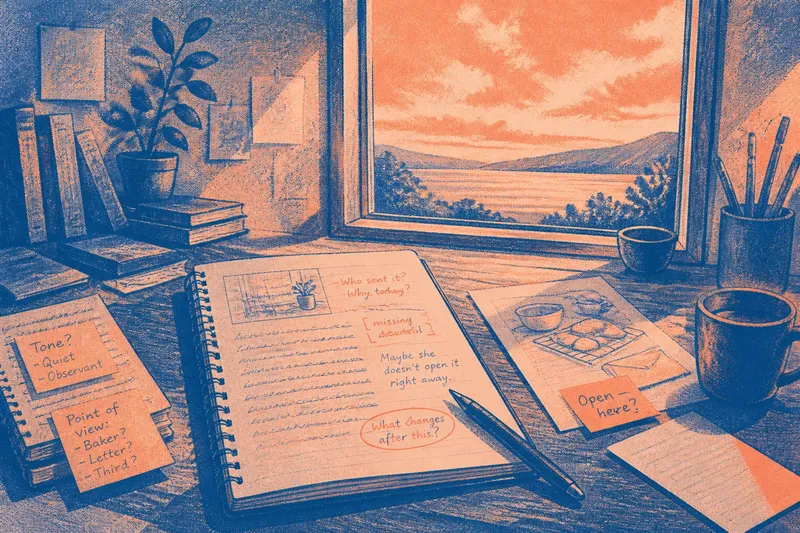
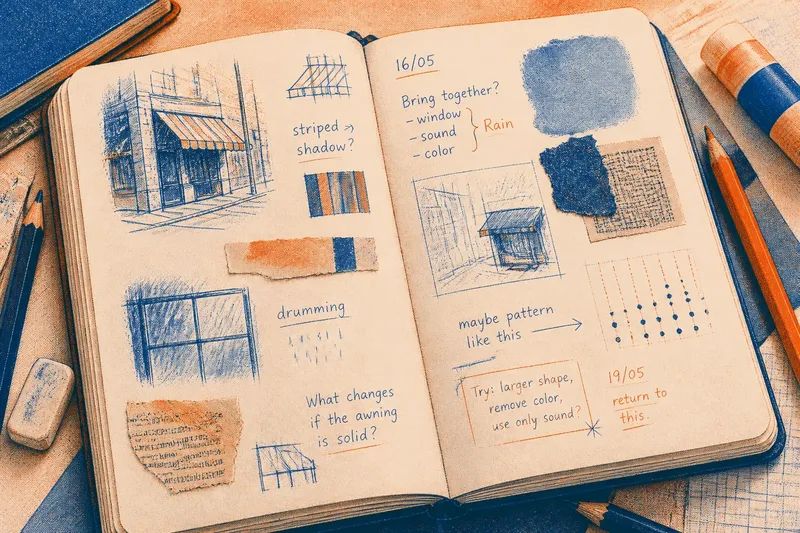
As you look, notice what is present rather than judging whether it is good. You might find a strong fragment, a question that remains open, a tool you had been using, or an idea that no longer interests you. Each is information about the current state of the project.
3. Review without revising
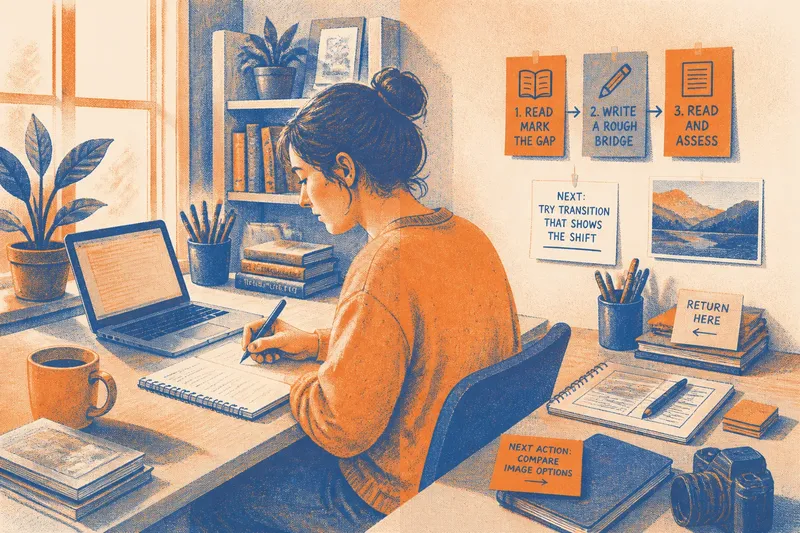
Read or inspect the existing work once without trying to improve it. Editing while you are still figuring out what the project contains can scatter your attention: one awkward sentence leads to a rewrite, or one unfinished sketch prompts a new direction before you have seen the rest.
Instead, make a brief inventory in plain language. Record what exists, what appears unfinished, and what still feels worth your attention. Keep observations separate from judgments: “the middle section has no transition” points to a feature of the draft, while “this is a mess” offers no useful direction.
There is no need to decide the project’s final form during this review. A collection of sketches may be a source for one piece rather than a book; a draft may need a different ending rather than more pages. First establish what you have, then consider what shape it might take.
4. Choose one re-entry point
Pick a small action that begins from something already in the project. A good re-entry point is concrete enough to start without a long planning session, but meaningful enough to reconnect you with the work’s central material.
- For a draft, mark one passage that still interests you and add a note about what it needs.
- For a drawing, choose one study and make a small variation beside it.
- For a song, listen to one unfinished section and write down the unresolved musical question.
- For a craft project, lay out the existing pieces and identify which part is ready for your attention.
- For a research-based creative project, return to one source already collected and record the idea it brings back into focus.
Say you left a short story after drafting its opening scenes and have a folder with two versions and a note about a character’s decision. You could read the note, choose the version that best carries that decision, and mark the paragraph where it becomes unclear. That leaves you with a visible place to work next, without requiring you to settle the whole story on the spot.
5. Keep the task within reach
Before you begin the chosen action, define what “done for this visit” looks like. It might be one marked passage, a labeled sketch, or a written question. A clear endpoint helps prevent a simple return from expanding into an exhausting attempt to repair everything.
If your first choice proves harder than expected, scale it down rather than treating the difficulty as evidence that you should quit. Instead of revising a whole section, mark one sentence that needs attention. Instead of completing a piece, identify the material or decision that blocks the next move.
Sometimes the review reveals that the project no longer fits your interests or circumstances. You can pause it again, change its intended form, or decide to set it aside. A reset is useful even when it leads to a considered pause, because you are making that choice with a clearer view of the work.
6. Leave a return note
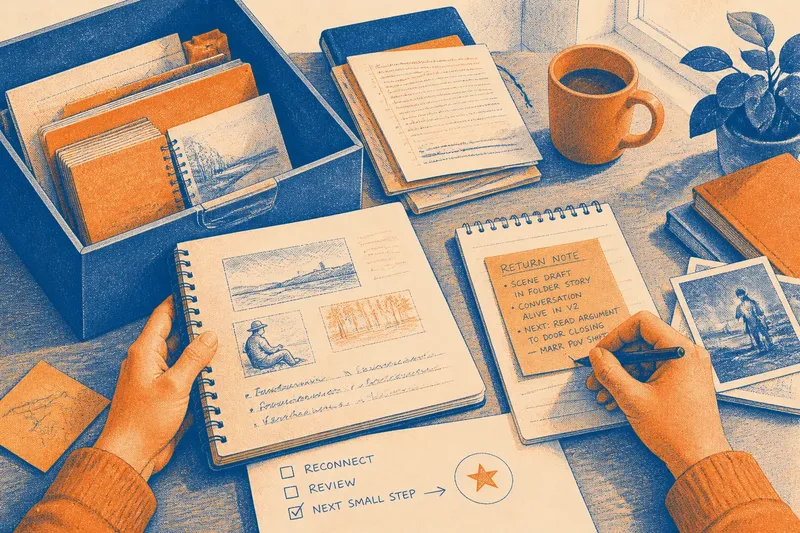
Before closing the materials, write a short note for the person who will reopen them later: you. Include the location of the relevant file or object, what you noticed, and one action that can begin the next visit. Make it specific enough to be useful without turning it into a schedule or a demand.
For example: “The scene draft is in the folder marked Story. The conversation feels most alive in the second version. Next time, read from the argument through the door closing and mark where the point of view shifts.” This note preserves the trail of your attention, so you do not have to reconstruct it from memory.
Put the note where you will meet the project again: at the top of the document, on a sticky note inside the sketchbook, or beside the materials in their storage place. If several versions exist, name the one you used. Small locating details can make the next return feel much less like starting over.
7. Decide what stays open
End by choosing what happens next, without confusing that choice with a judgment about your ability. You might leave the project ready for another short visit, place it somewhere visible, or store it with the return note attached. If you are unsure whether to continue, keep the next commitment limited to reopening and reviewing the note.
When there are several paused projects, avoid reviving all of them in the same sitting. Choose the one whose existing materials are easiest to access or whose next action seems clearest. That is not a ranking of which project matters most; it is a way to make one return possible without creating a new pile of obligations.
Questions about returning?
What if the project looks worse than I remember?
Write down what you can observe before deciding what it means: an unfinished ending, inconsistent marks, or a section that no longer holds your interest. Then choose whether a small revision, a different direction, or another pause makes sense.
Should I start by rereading everything?
Not necessarily. Begin with the latest material and any note that records where you stopped, then review more only if it helps you identify a useful point of re-entry. The aim is to understand enough to act, not to recreate every detail of the project’s history.
What if I cannot find a clear next action?
Turn an abstract concern into a question you can investigate. Instead of “fix the whole piece,” try “which version has the clearest opening?” or “what is missing from this sketch?” If the question still feels too broad, make the next action simply to mark one part that holds your interest.
Can setting it aside again count as progress?
Yes, if the decision comes from a clear look at the work rather than pressure to prove you can continue. Leave a note about why you are pausing and what would help you reconsider later, so the project is easier to understand if you return.
A gentle reset for a project left untouched does not need to produce a finished piece or a new routine. Its practical value is that you leave with a clearer view of the materials, a workable point of re-entry, and a note that makes the next return easier to begin.