A Quiet Hour or Three Short Sessions?
Choose a quiet hour or three short sessions by matching the work to your available attention, setup needs, and the interruptions your day is likely to bring.
The common mistake in choosing a work rhythm is treating a quiet hour as automatically better than three short sessions. That can cost you a usable stretch of attention—or leave a brief window swallowed by setup and restarting. The better choice depends on what the task asks of you and what your day can realistically hold.
A quiet hour means one continuous block of focused work. Three short sessions divide the same general effort across separate windows, with breaks or other activities between them. Neither format is a measure of seriousness. Think of them as different containers: a large bowl suits a long task, while small cups are easier to carry through a crowded day.
To choose, look at the work’s continuity, the cost of getting started, and the likely shape of interruptions. Then decide what a useful session would leave behind: a complete passage, a few considered options, or a clear note for your next return. This is not about planning every minute; it is about avoiding a mismatch between the task and the time you actually have.
Choose by task shape
Some creative tasks depend on holding several connected decisions in mind. Drafting a difficult scene, arranging a set of images, or revising an argument may require you to keep track of tone, sequence, and earlier choices. A longer block can help because you spend less of the available time reconstructing where you were.
Other tasks come in natural, bounded pieces. Sorting reference images, warming up with a few sketches, or generating alternate titles can fit a shorter session. A brief period may even make it easier to begin if the task feels manageable once narrowed to one specific action.
Ask what would count as progress without pretending the whole project must be completed. If progress depends on seeing a sequence together, protect a longer stretch when possible. If one discrete piece can be moved forward independently, short sessions may work well.
When a long block stalls
A quiet hour can feel frustrating when the first part disappears into settling in. You open a document, reread the previous page, adjust a brush, and wonder whether you have started at all. The cause may be a high re-entry cost: the work requires context that is not immediately available.
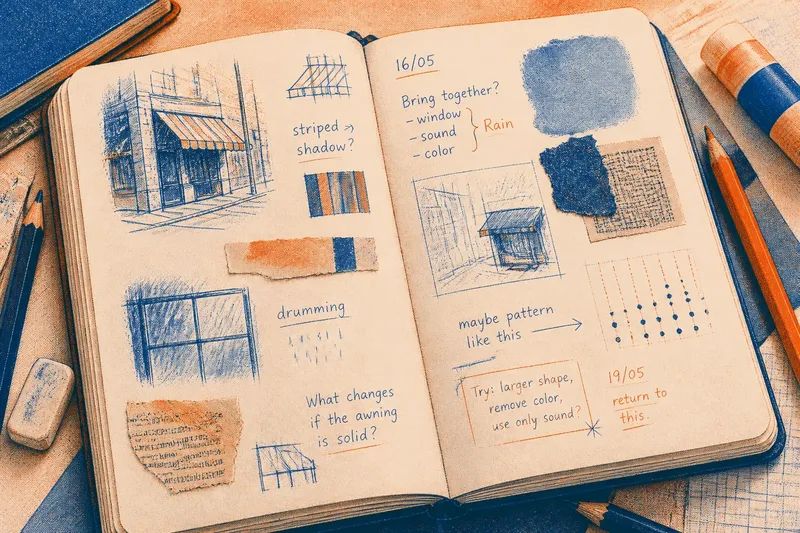
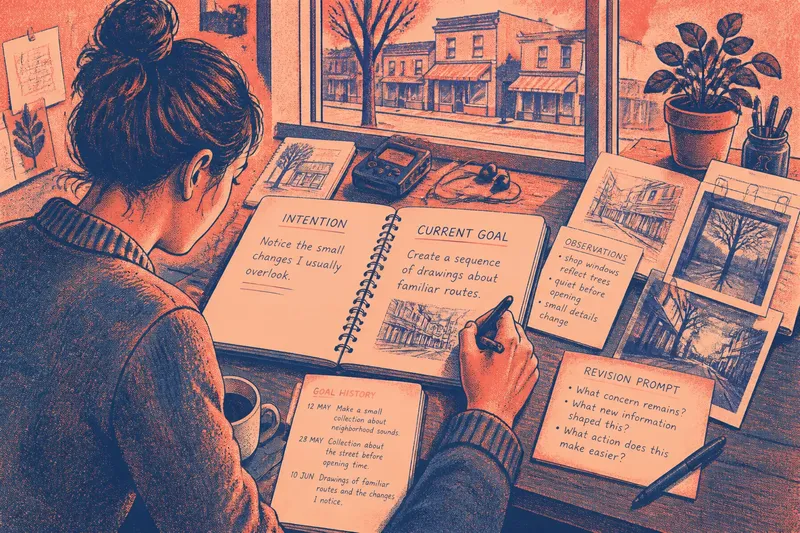
Try leaving a small re-entry cue at the end of your previous session. It might be a sentence naming the next decision, a marked paragraph in a manuscript, or a sticky note beside a drawing that says which area needs attention. When you return, begin with that cue rather than reviewing the entire project. The note is not a plan for the whole day; it is a bridge back into the work.
A different problem appears when an hour is repeatedly interrupted. You may keep trying to resume, but each interruption breaks the thread before the task reaches a useful stage. If interruptions are predictable, choose a shorter window that fits between them, or reserve the continuous block for a quieter part of the day. If they are unpredictable, make the session’s aim small enough to pause without losing the whole line of thought.
When short sessions fragment
Several brief periods can create a lot of restarting. The first session finds the materials, the second tries to remember the intention, and the last ends just as the work begins to feel coherent. This often happens when each period is too short for both setup and meaningful work, or when every return requires rereading, rearranging, or recalibrating.
Reduce that friction by making the next action visible before you stop. Leave the file open at the relevant section, place the chosen materials together, or note the question you were trying to answer. Keep the workspace safe and orderly; do not leave tools or materials in a way that creates a hazard for others. The point is to make returning simpler, not to create a permanent work station.
Short sessions can also feel scattered if each one tackles a different part of the project. Instead, give each session one connected purpose. For example, use one period to gather possible images, another to compare them, and a later one to make a selection. That sequence preserves a thread while respecting the day’s interruptions.
Match rhythm to the day
Available time is not the only constraint. Notice when your attention tends to be clearest, how much preparation the task needs, and whether your surroundings allow you to stay with it. A long block may fit a quiet morning but not a day with frequent appointments. Three short sessions may suit a flexible schedule, but they still need realistic start points and enough time to engage.
Use a simple decision order:
- Check continuity: Does the task depend on holding a connected sequence in mind? If so, lean toward a longer block.
- Check setup: Does starting require gathering materials or rebuilding context? If so, reduce that cost before splitting the work.
- Check interruptions: Are they likely and difficult to avoid? If so, choose a window that can survive them or a task that can pause cleanly.
- Check the next action: Can you name a useful, bounded piece of work? If so, a short session may be enough.
- Check the stopping point: Can you leave a clear cue for your return? If not, reserve a moment to create one before ending.
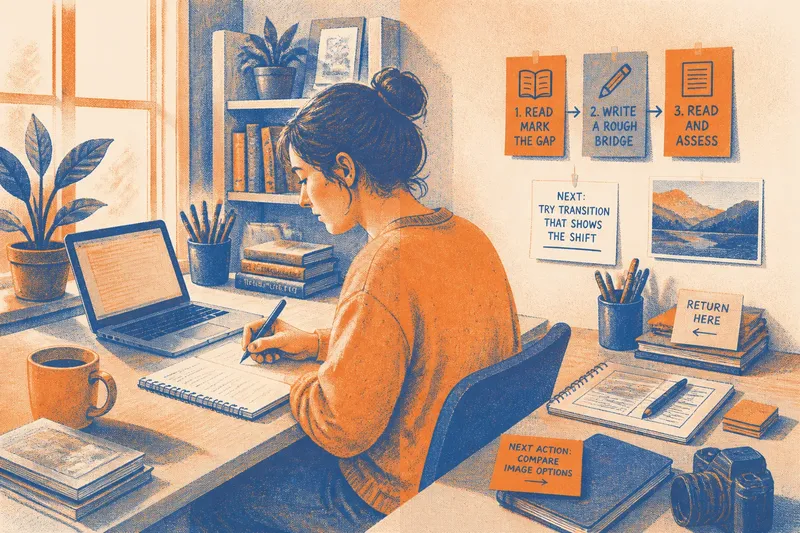
Say you have a draft that needs a careful transition between two sections, and your afternoon is broken up by errands. You could use the first brief session to reread only those sections and mark the gap, then leave a note naming the transition you want to try. In the next available window, write a rough bridge and read it with the surrounding paragraphs. The expected observable result is a draft with a specific transition to assess, rather than a vague sense that you worked on the piece.
Questions about work rhythms?
Is a quiet hour always more productive?
No. A continuous block can suit work that depends on sustained context, but it can be a poor fit when interruptions are likely or the task has a high starting cost. Choose it because the work benefits from continuity, not because a longer session sounds more disciplined.
How short can a creative session be?
Short enough to fit your day, but long enough to complete one defined action after setup. If most of the session goes to opening files or finding materials, prepare the next action in advance or choose a task with a simpler entry point.
Should I use the same rhythm every day?
Not necessarily. A recurring rhythm can make starting familiar, but task demands and daily conditions change. Keep the parts that help you begin, and adjust the session length when the work or schedule calls for it.
What if I cannot tell which rhythm fits?
Try one format for a particular task and notice what remains at the end: a coherent piece of work, a clear next action, or mostly setup and recovery. Treat that observation as useful information, not a verdict about your ability to focus.
Make switching deliberate
Changing formats is reasonable when the first choice is not serving the work. If a long block repeatedly dissolves into interruptions, divide the next attempt into shorter periods. If brief sessions keep losing the thread, protect one continuous window and make its purpose narrow enough to hold.
Avoid switching merely because the work has become uncomfortable. Creative decisions can feel unsettled before they become clear, and a new schedule will not resolve every difficult choice. Instead, ask whether the problem is the rhythm itself—too much restarting, too little continuity, or no reliable place to begin—or whether the task simply needs a different decision.
Choose the quiet hour or three short sessions by matching the rhythm to the task, then leave yourself a visible point of return. The most useful schedule is the one that gives the work enough continuity to move and gives you a realistic way back when the day changes.